Saturday, July 18, 2009

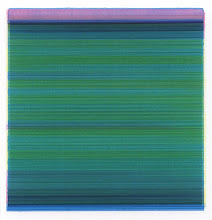
Helen Miranda Wilson at Victoria Munroe

.

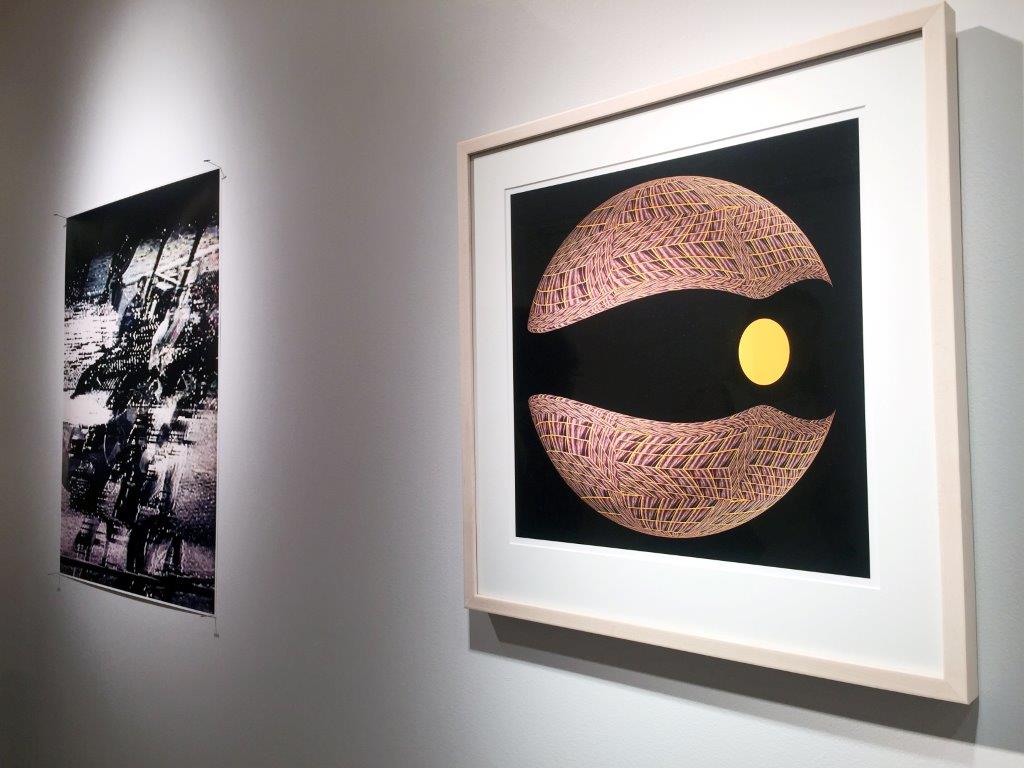
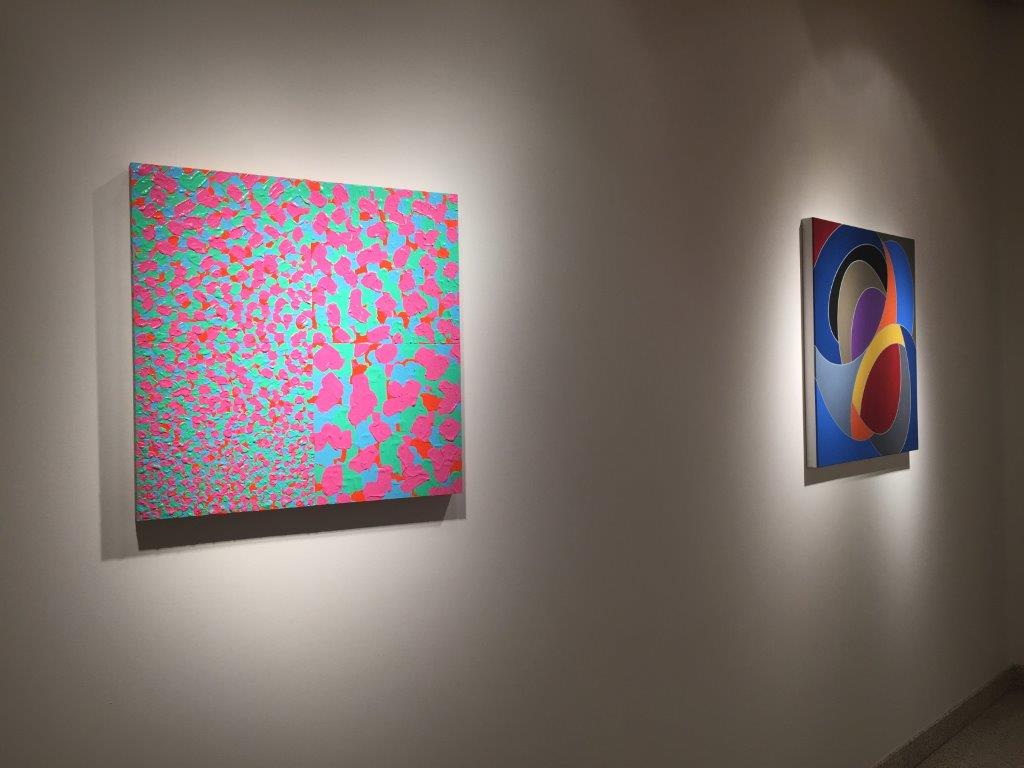
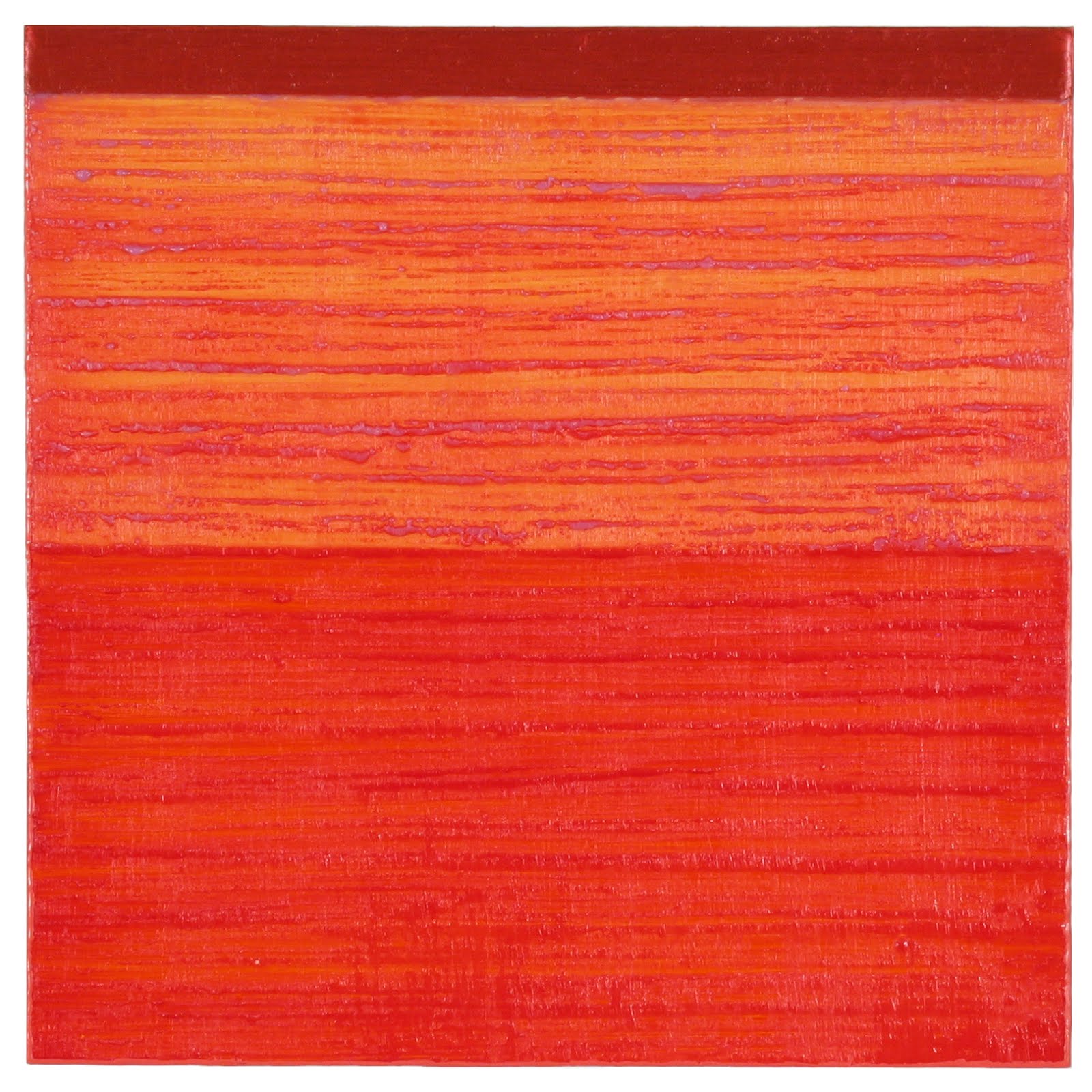
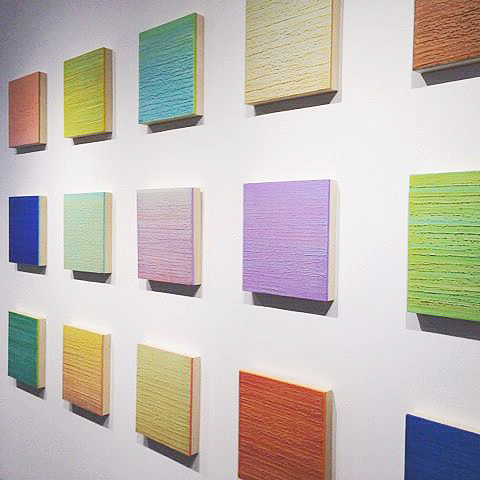
BOSTON: I am a fan of Helen Miranda Wilson's geometries. I've seen her oil-on-panel paintings at DC Moore in New York and at Albert Merola in Provincetown. Recently I saw her framed gouache-on-paper paintings at the Victoria Munroe Fine Art on Newbury Street in Boston, where her solo show ran May 14-June 20. The townhouse's two rooms provided an intimate viewing space for the small works.

The simplicity of the elements—blocks and stripes, and now spirally concentric circles and ovals—allow the viewer to concentrate on the color (beautiful, seemingly improvised), structure (repetitive, meditative), and the composition (mandala-like yet vertiginously active) in a way that melds the esthetic and the spiritual. Her show was called Halos.
Here, take a look:
.


The stairway to the gallery
.


The front gallery, with work over the mantel, below
.


.
Moving around the front gallery, we look through the hallway to the smaller back room. the work to the right in the doorway is shown below:
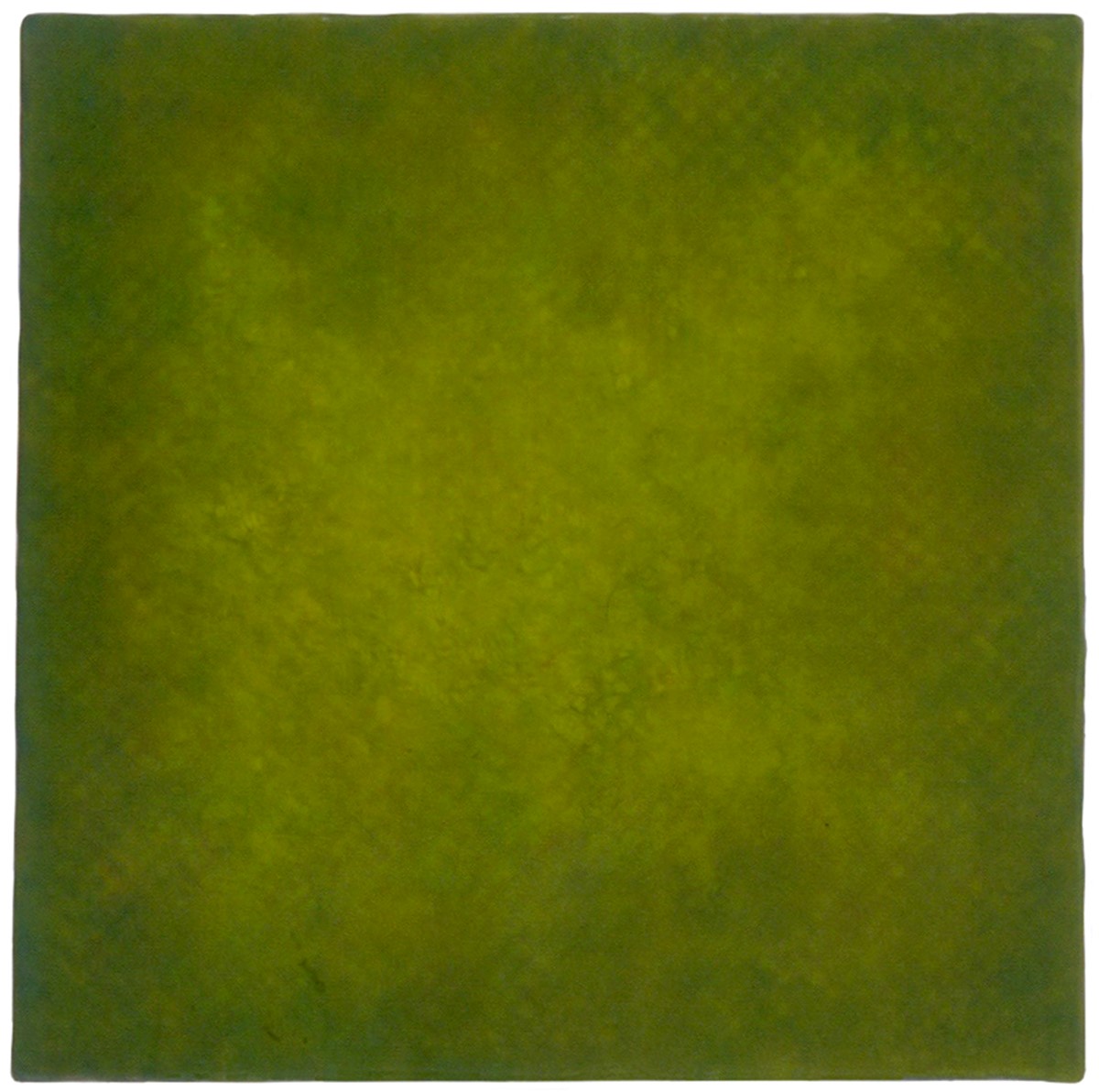
Castalia, 2008, app 21 x 18, framed


Top and bottom images taken from the Victoria Munroe Fine Art website
.

Wednesday, July 15, 2009

Darra Keeton and David Headley at Drawer 158 in Tribeca

Drawer 158: Home as gallery
.

Among the many things I love about New York is its entrepreneurial spirit. Case in point: Drawer 158. Located at 158 Franklin Street, it's a loft--a private home--that becomes an open-to-the-public gallery on Saturdays from 1-5. It's run by Karen Cantrell and Andrea Callard.
.
The current exhibition, up through this Saturday, July 18, features the work of Darra Keeton and David Headley, both excellent painters (and both friends of mine). If you're in town, head on over to take a look. Questions? E-mail the gallery at drawer158@gmail.com.

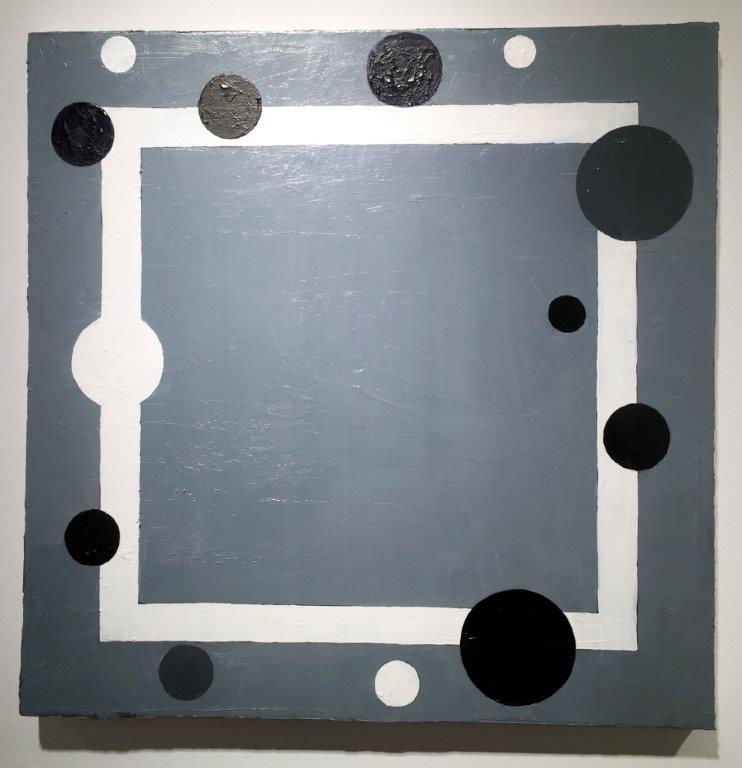
Both painters ply structure against organic development. For Headley, showing work from a series called Pariesienne Walkways, that's typically a geometry of dot and line laid over a saturated ground of fluid but controlled color. The result pulls you in, giving you the choice of paced perambulation or a delicious splashabout in the deeper space of the picture. Artists who work on paper, take note: This work on paper is cleverly mounted on a backing and affixed to a panel.


David Headley: Installation above, with paintings from his Parisienne Walkways series

Below, from the series: 3-16-2008 (blue spots), mixed media on paper, mounted on wooden panel,16 x 12 inches


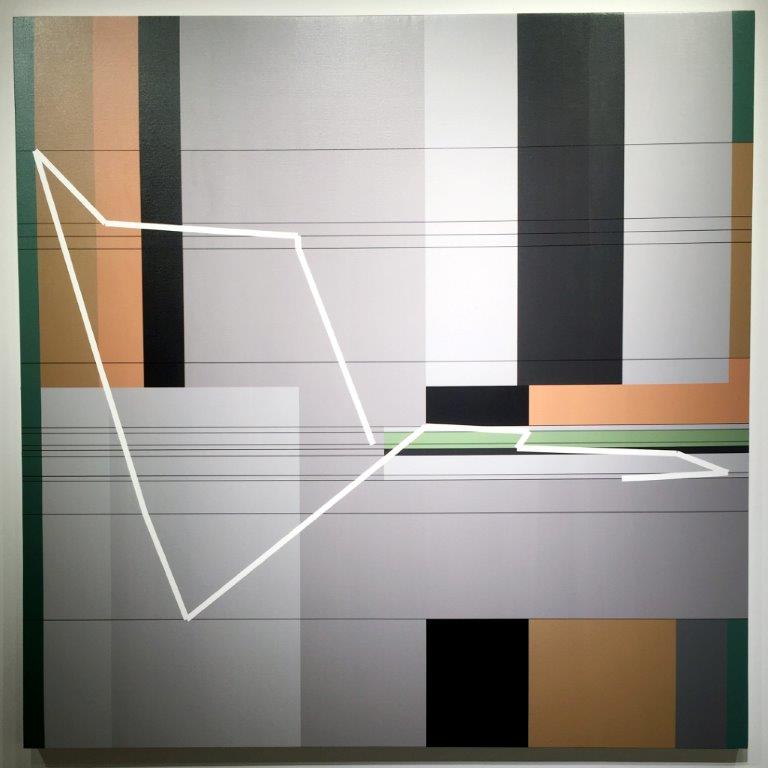
Keeton's structure is more organic. She creates tangled grids as she turns her painting this way or that, allowing the paint to flow vertically or horizontally. Sometimes one direction prevails, and the effect is more like a waterfall, or an explosion of fireworks. These paintings are as airy as mesh, but make no mistake: they're as tough as they are beautiful.

Keeton's works on paper are tacked to the wall. In a conventional gallery I'm not usually so keen on pushpins but here, in a loft that is transformed one day a week into a gallery (with excellent lighting, I might add), the effect is intimate and immediate. A larger acrylic on canvas painting in the dining room, in the unexpected palette of lavender and yellow, is simply beautiful.


Darra Keeton: a wall of paintings on paper;

Below:
Writing My Memoir #4, 2008, acrylic and gouache on paper, 30 x 22 inches


Darra Keeton:
Fretwork, 2008, acrylic on canvas, 60 x 60 inches

.

Tuesday, July 14, 2009

Here Comes the Judge


.
The white upper-middle-class male point of view may be the default position in politics (and the benighted repugnican viewpoint its radical extreme), but the default needs to reset. Scootch over, boys.
.
Let's see more "wise Latinas," "uppity negroes," ambitious African-Americans, political transvestites, "diesel dykes," lesbian moms, married gay couples, in-charge Asian-Americans, assertive Native Americans, unintimidated women of all ages and stripes--and many others who bring ethnicity, gender, race, age, sexual orientation and culture to bear on decisions that affect a society in which all of the above outnumber the defacto model.
.
Click here for more info on the Sotomayor poster.

More on "Wise Latina"
. The blogosphere's own C-Monster writes Just What is a 'Wise Latina' Anyway? for Time
. Eugene Robinson's Whose Identity Politics in the Washington Post
. Judge Sotomayor in her own words
.

Monday, July 13, 2009

Marketing Mondays: How to Reject a Gallery

BUT NO THANKS

Sometimes the shoe is on the other foot, and instead of receiving a turndown, it is you who must do the turning down.

Here's reader C.M.:
I was wondering how to tell a gallery you are not interested in being represented by them or being part of their upcoming programming. Doing it gracefully is proving to be quite difficult. How much info should you give, how much is too little or too much?

First of all, this is a great problem to have, no? But as C.M. suggests, not all artist/gallery fits are good. So I'm going to talk not just about how to decline an invitation, but about why you might want to decline. Generally when responding, less is more.

. Is it about a difference in esthetics?
This is easy: I like you and your program, but I don’t think our sensibilities are a good match.


. Is it about the terms by which a gallery expects to do business?
You want a gallery that has good business practices: advertises, makes sales, has a good online presence, holds the best damn openings in town. If they don't do enough of what you need, let them know: I'm accustomed to a situation in which my work will be promoted online and in print, and in which the gallery handles things like pickup and delivery and framing.
. . . . . OK, so this is a difficult time, and some galleries are cutting back to be able to stay in business, but don’t believe a gallery that says "it is gallery policy" to do/not do this or that. Artists who sell better, who have a higher professional profile, typically get more. If you like the gallery but need more than they’re offering you, ask for more. If they can't give it to you, thank them for their interest in you and suggest that perhaps when the economy picks up we can revisit the possiblity of working together.

. . . . . But I would ask you: Does a situation like this have to be black and white? Can you participate in an occasional exhibition without committing fully? That gives both you and the gallery a chance to try each other out.

. Is it about the reputation of the gallery?
If it's got a bad reputation, your response is a no-brainer: It appears that we don't have the same goals. Thank you for your interest in my work. Do not let yourself be cajoled into going against your research--or your instinct.

. Is it about the personalities involved?
If you don't trust the dealer or you really don’t like her/him, that's not the person you want to be involved with. A relationship with a dealer is not sexual (not usually, anyway) but it is certainly personal. If you don’t like the person, that's going to be a hard relationship to maintain. Don’t let yourself be bullied. How have you turned down dates? That's the approach you need to do here, because it really is about personal preference.


. Is it about the level of the gallery?
If it's showing a step-above-hobbyists, that's another no-brainer: I need to be with a gallery whose roster of artists is more closely aligned with my exhibition history and collector base.
. . . . . If it's a good emerging gallery and you’re a mid-level artist, that's a harder call. Does the gallery get reviewed locally or regionally? Are the sales good? If you feel your career is too advanced for the gallery, that may be exactly why they want you. Dealers are looking to move up, just like artists. They may be looking to you to be the person who helps them do that. Assuming you respond to the the esthetic and the folks involved, ask for more: the Art in America or Art Forum ad, a catalog, inclusion in their next art fair.
. . . . . If they say no and you feel there's nothing in it for you, say no: I like the gallery and I like you, but I'm afraid you're going to have to spend so much time and effort developing the careers of your emerging artists that my needs will be overlooked.

Red Flags
. Is the gallery known for never paying on time? If so, don’t assume you will be the exception
. Is the dealer unwilling to share the names of the collectors who acquire your work?A an artist/dealer relationship is based in large part on trust
. Is the dealer a screamer (watch how he treats the staff); a schemer (do you hear stories of artists being pitted against one another); woefully disorganized (payments are late, work gets "lost" or actually misplaced, inventory records are incomplete); a manic type who needs everything yesterday then oh-never-minds after you have killed yourself to deliver?
. Have you heard rumors of the dealer selling at a "discount" but learn the collectors have actually paid full price?
. Does the gallery ask you for money?
. . . . . You may have to ask around to get some of these answers, but the artist information hotline—i.e. conversation, gossip, e-mail inquiries—may yield answers. I have often asked artists about Gallery A, or even a friendly Gallery B about A. I've also e-mailed artists who I know used to be involved in a gallery; I tell them I'm contemplating getting involved with Gallery A and I wonder if they would be willing to share with me, confidentially of course, any insights that might help me make a good decision. People have done the same with me.

Bottom line: If you feel you must turn down a gallery and you're really stuck for words, thank them for their interest and say simply, I just don’t think we’re a good fit. They'll understand that. That's what they say to artists all the time.
.

Saturday, July 11, 2009

(Un) Common Threads, Part 2: Group Show at Elizabeth Harris

.
In Part 2 of Common Threads, we follow a line from Edward Shalala's photographs in the previous post to his tangible work in the group exhibition, By a Thread at the Elizabeth Harris Gallery (up through July 24).
.
In a series of four works, Shalala shows the canvas reduced first to thread and then to its ultimate entity: dust. From there the pendulum swings in a more material direction--the artists in the exhibition are connected by the filament and fabric--and then back to deconstruction . Let's start in the back gallery, where Shalala's four canvas reductions are on display. Here's one:

Edward Shalala, Untitled #7, 2009, canvas dust dropped onto contact paper, 18 x 21 inches (image from the gallery website)


Moving around the gallery, we see Mary Carlson's blood spatters rendered in copper wire and Mike Asente's giant embroidery. Did I mention the show is eclectic? Here the element of roundness, and the graphic quality of red, black and white hold the room together.


Mary Carlson, Wiresplat 1, 2009, crocheted copper wire, 79 x 124 x 1.5 inches; detail below. Mike Asente's small embroideries are on the wall around the corner


Mike Asente, Holy Rays, 2009, embroidery floss on linen, steel hoop, 46 x 50 x 1.5 inches; on wall: Boom, 2009, embroidery on non-woven interfacing, 10 x 13 inches


Moving from the back gallery to the front, we see Carlson's splatter sculpture in the distance and Elisa D'Arrigo's handstitched sculpture on the wall. Then we continue around the gallery with more work by D'Arrigo, hangings by Leslie Dill, and a deconstructed piece by Elana Herzog. With these three artists in particular, I'm moved to consider the Norns of myth: the first spins the thread of life, the second fashions it into fabric of individual texture and length, and the third snips the thread when the time comes. Take a look:

From back gallery to front, above: Carlson's Wiresplat 1 and Elisa D'Arrigo's stitched sculpture, which you can see better below:

Elisa D'Arrigo, Terra Cotta 1, 2009, cloth thread, acrylic paint, acrylic medium, pigments, 20 x 18 x 3.75 inches (image from the gallery website)


Panning the gallery: two more small sculptures from D'Arrigo and two "thread poems" by Leslie Dill. Both artists are known for their stitched works

Below: Dill's I was Born with a Veil, 2003, silkscreen, fabric, thread, 90 x 45 inches (image from the gallery website)


Panning the front gallery. More below about column at right

Holly Miller, Snap #18, 2008, acrylic paint and thread on canvas, 36 x 36 inches (image from the gallery website)


Mary Carlson, Wiresplat 2, 2006-2009, crocheted copper wire, 56 x 140 x 1.5 inches; right, Elana Herzog, Untitled, Column Series #3, 2009, stapled fabric on constructed column

Below: a detail of the work (image from the gallery website).
And that takes us back to deconstruction--a nice denouement for a show in which materiality is the theme.


.

Friday, July 10, 2009

Ars Longa Exceptum Plasticus

.
"At this point there is nothing further that can be done with them, except to freeze them."

No, this is not the LA coroner talking about a certain pop star's endlessly resculpted parts, but the Walker Art Center's associate registrar, Joe King, talking about two works by Joseph Beuys in its collection, which are made from plastic that is starting to deteriorate.

This information comes from
Weeping Barbie Syndrome Strikes Walker Art Center, posted by writer Marianne Combs on her State of the Arts blog for Minnesota Public Radio News on July 6. Combs, aware of the post on Slate.com (see below) went to the Walker to find how the institution's plastic works are faring. That's when she learned that when PVC deteriorates, the plasticizer in the material migrates outward, making the surface wet and sticky (first noticed on the pre-astronaut bambola); that outgassing can also damage adjacent works; and that the Beuys works are in freezer lockdown.


What do Barbie and Beuys have in common?


On July 1, Slate.com's Sam Kean asked and answered this question: Does Plastic Art Last Forever? Not Even Close. Apparently it cracks, browns, melts, weeps and smells. Oh, and it can explode, too.

Thanks to my blogosphere buddies C-Monster and Hrag Vartanian for their links to these stories. (And a shout out to Hrag for noting my review of Ed Winkleman's book in the same group of posts.)
.

Thursday, July 09, 2009

(Un)Common Threads, Part 1


Several current and recent exhibitions have as a common thread the, well, common thread--deconstructed, reconstructed, repurposed and carefully structured.

At the Anton Kern Gallery, Lara Schnitger (through June 20), showed an installation of knee-high hose stretched and knotted into a curtain that both divided and defined the gallery space. Looking at the gallery site, I see that the artist is no stranger to the use and reuse of commonplace materials.


Lara Schnitger at Anton Kern: White Cube Hosiery, 2009, nylon & wood, variable dimensions


At Yvon Lambert, Shinique Smith (Ten Times Myself through July 31), mines what the press release describes as "an autobiographical narrative"." In baling, compressing and amassing fabric as she does, Smith imbues these materials with palpable energy. I don't know her. I don’t know her story, but, man, I feel the a life force emanating from that work.

Above and below: Works by Shinique Smith at Yvon Lambert. No information on gallery website

.

At Pavel Zoubok, Donna Sharrett (Reverb, through May 23) most certainly mines personal history. Her work is about memory, specifically the memory of her musician brother who died several years ago, but also the nature of memory itself. Exquisitely hand stitched, knotted and pieced, the work incorporates material elements given to her by friends and thus becomes a web of interwoven recollections that extends beyond the artist herself.

(While Reverb is over, Sharret's work is included in Daughters of the Revolution: Women & Collage, which runs through August 14 at the gallery.)

.

Donna Sharrett at Pavel Zoubok, installation view


Donna Sharrett: The Long Black Veil, 2003-2008, rose petals, handmade rose beads, synthetic hair, guitar-string ball ends, pennies, blue jeans, cotton fabric, rings, bone beads and buttons, synthetic pearls, thread; 36 x 26 inches

Detail below

.

In the Contemporary Art galleries the Metropolitan Museum of Art, Liza Lou is represented by Continuous Mile, a mile-long coiled rope of white beads that is laid in the form a cylinder. Lou employed a team of beaders from KwaZulu-Natal, South Africa, to do the work. I first saw the sculpture at L&M Arts a few months ago, but since I couldn't photograph the work there, I didn’t write about it. I'm glad for the opportunity to revisit it here. You'll note it's placed near the museum's Damien Hirst sculpture but I must say this work, so simple yet so complex, blows that shark out of the water.


Liza Lou at the Met: Continuous Mile, 2007-2008, glass beads, cotton; loan from the artist, on continuous exhibition at the museum for two years

.

At the Painting Center, Edward Shalala (Documentary Photographs, through June 20) takes the most minimal of materials, the thread itself, and makes the most fleeting of works, a temporary painting that consists of a continuous length of unraveled-canvas thread which is arranged in an airy coil on the ground. What remains as evidence is a black and white photograph. The work recalls both the manifestly material, Smithson's Spiral Jetty, and the evanescent, Ana Mendiata's spirals gouged into the earth.


Edward Shalala at The Painting Center: untitled, documentary photograph of
raw linen canvas thread painting on basketball court at Sarah Roosevelt Park, New York City; c-print 11 x 14 inches, 2009

We follow the thread from Shalala's solo at the Painting Center to his inclusion in the current group show at the Elizabeth Harris Gallery (By a Thread, through July 24) . That's where's we'll go in the next installment later this week.

Note: Summer hours for many galleries are Mon-Fri. Please check before you go.

.

Monday, July 06, 2009

Marketing Mondays: What Artists Should Know About Running a Gallery

.
Recently I reviewed The Artist's Guide by Jackie Battenfield. Now in a lovely bit of publishing symmetry, there's a dealer's guide, How To Start and Run a Commercial Gallery by Edward Winkleman, about to be released by Allworth Press.


Ed has a gallery in Chelsea. He's also a widely read blogger, which you probably know already even if you haven’t been to his gallery. Ed's blog attracts an assortment of artists, dealers, collectors and critics who come in all degrees of intellect, anger, creativity, bitterness and kindness—in other words, an art world in miniature. His online generosity has flowed into his book, which in turn has flowed out of his experience as a respected New York art dealer.

While the book's intended purpose is to help a potential dealer understand how to start and run a commercial gallery, it also provides artists with a clear look at what goes on behind the scenes.
Why is this important?

For one thing, understanding the dealer's concerns and activities will help you present yourself in a way that complements the gallery's program. For another, it underscores the idea that artists and dealers are not so different. Here's Ed: "This is a business in which very little is stable . . . rent in your neighborhood will skyrocket, forcing you to find a new location (and consuming all the money that moving requires); and critics will inexplicably hate your latest exhibition. . . It never really gets easy. Some months you’re flush; others, you’re scrambling." Sound familiar?

Identity and branding; pricing; contracts and legal issues; logistics like crating, shipping, framing; cash flow; and the art fairs are all covered in
specific chapters. Independent artists will find the information eminently useful. Though the crashing economy will undoubtedly require second-edition revisions in the Art Fair chapter, it's edifying to see how closely the submission process for dealers to art fairs parallels that of artists to galleries.

I found these chapters of particular interest to artists:

. Chapter 10, Staffing and Management Practices
Ed talks about job titles and responsibilities. Wondering whom to send your materials to? He explains the hierarchy. But more than that, when he tells you what it takes to run a gallery, you can see it's almost the same as what it takes to run a studio. We make, the gallery sells. But we all share the same tasks: photographing work and archiving images, tracking inventory, maintaining records, PR, packing and shipping, bookkeeping. I particularly liked reading about how several New York galleries divide the workload with staffers. The smaller galleries take on multiple tasks, just like artists.

. Chapter 11, Promotional Efforts: Publicity and Advertising
The information here will help an unaffiliated artist create her own promotional strategy. Better still, extrapolating that information, once you follow a gallery and understand the way it presents itself to the art world, gives you a way to approach that gallery.

. Chapter 14: Artists: Where to Find Them; How to Keep Them
Make a beeline for these 24 pages. Nothing takes the mystery out of the submission process better than learning how a dealer puts a roster together. Here's how Ed found/finds his artists, in order of frequency: "recommendations (including from other dealers), institutional exhibitions, open studios, cold call submissions."

. . . . . In other words: show, show, show, show and network, network, network. This goes along with what I know of dealers. Their websites may say "No submissions accepted at this time," but they are always looking. As for cold-call submissions, they are, confirms Ed, "the least productive means of finding suitable artists." If you must go this route, do your homework. "Every now and then an unsolicited submission will make your day. Either the artist has done his research and knows his work is a good match for your mission, or fate smiles on you."

Will reading this book automatically get you into a gallery? No. But it will give you insight into the gallery process. An artist who understands the system and is willing to do her homework to find the right matches and submit to the rigors of the process has a much greater chance of getting into a gallery she has targeted.--and equally, important, flourishing there.

And here's the corollary to that: When the economy finally starts moving in the other direction, a new crop of passionate entrepreneurs will be poised to open their doors. Galleries need artists.
.

Thursday, July 02, 2009

Getting High in West Chelsea

.

The view from the High Line, above (that shaped building is by Frank Gehry) and on the High Line, below. The plantings are native grasses and wildflowers


One recent weekday afternoon the omnipresent gray sky softened long enough for me to head over to the new High Line Park in West Chelsea for a look see. I climbed the stairs at 20th Street and 10th Avenue and began walking south in this narrow park in the sky.

Located on the elevated tracks of a former industrial freight railroad, the High Line is now a city park with a smooth concrete walking surface and wildflowers (!) in bloom, with just enough track left peeking through here and there to remind you of the origins of this bucolic gem. Thirty feet up from the traffic it's surprisingly quiet, and because bikers and bladers are not allowed the passeggiata is a far more serene experience than at the shoestring park along the Hudson, where unconscious walkers clog up the bike lanes and speeding bikers try not to mow them down.

The park is up there on the elevated line. You can ascend at 20th, 18th and 14th Streets. The stairs at 20th Street, below


Climbing, climbing . . .


. . . The idea of park doesn't really materialize until you're just about on top of it, below. Before the multimillion-dollar makeover you could look out the windows of various galleries to see patches of grass visible sprouting from the gravel, but not like this:


Originally built in the 1930s to carry goods from the 35th Street rail yards to warehouses that line the Hudson River down to Gansevoort, the High Line fell into disuse 50 years later. If you've been to Chelsea in the past two decades, what you saw was a rusting overhead monstrosity that delivered the frequent and numerous droppings of pigeons that roosted there, and until recently served as the anchor for the annoying look-at-me billboard musings of one Patrick Mimran, above. (The overhead is still underdeveloped above 20th Street. Ongoing work is expected to be completed next year.)

For now, it offers a pleasant stroll for 10 blocks, or half a mile. There are some odd segments. One is the overlook at 17th Street, left, a kind of amphitheater whose rows of seats are set to look down on . . . the traffic heading up 10th Avenue. The architects, Diller & Scofidio, did something similar with their media room for Boston's Institute of Contemporary Art, except there the view is of the harbor. But I'm being picky. The amphitheater offers a lot of seats for walkers to sit and talk, have lunch, read the paper, and plenty of sky.

Commerce has asserted itself in some some pleasing and not-so-pleasing ways. Pleasing: Food vendors selling tasty snacks. I had a savory slice of leek and cheese pizza with a flaky crust from, I think, City Bakery. (That pretzel-croissant dough is a unique taste; it had to be City Bakery.) Not-so-pleasing: the gargantuan V-shape building that is the newly built Standard Hotel, which straddles the park with wide concrete legs and towers over it like something out of Transformers.


The Standard Hotel straddling the High Line


Speaking of straddling, there are some views right into apartment buildings that line the slender park, and word has it that a few residents are having sex for all to see. (What's weirder? Being the voyeur or the voyee?) That's gossip, though. I haven’t even seen doggies doing it—and that's because dogs are not allowed in the park.

Uh, I'm the voyeur with the camera reflected in the window of an apartment.

But enough talk. Let me show you some pictures that take you down to Gansevoort Street:


Above: At 17th Street, looking west to the Hudson

Below:
Looking east on 14th Street. The block you see here used to be the meat market, as in actual sides of beef hanging on hooks outdoors. Now it's home to such chi chi shops as Jeffreys. After midnight, it's still a favorite haunt for the tranny hookers. Talk about mixed-use zoning


As I ambled south, the leaden sky opened up. Sun!
That's New Jersey across the Hudson

The original rail line traveled through the center of several warehouses. Now those buildings are under renovation. . . .

. . . Inside one building is an installation by Spencer Finch, who traveled the Hudson photographing the color of the river. Those hues were translated to glass panes which now color the windows of a long stretch of outside/inside wall


Not sure who did this installation, but someone's been color coordinating


A raised bed for plantings; my favorite stretch of track, below


The end of the line: Washington Street at Gansevoort

Below: Cafes and clean streets. There's even a Helmut Lang boutique nearby


Wednesday, July 01, 2009

This blog is proudly Michael Jackson-free. No news. No gossip. No pictures. No interest.

Tuesday, June 30, 2009

(The Lack of) Women Artists at MoMA: Saltz on FB, Reprinted on Winkleman

.
The indefatigable New York and New York critic, Jerry Saltz , is leading a spirited discussion of gender inequality at MoMA. Starting point--for this leg of the discussion, at least--is the report on his Face Book page of his meeting with Ann Temkin, Chief Curator of Painting and Sculpture at the museum. (Not sure if it's kosher to link to FB this way?)


.
Comrades in struggle: The Guerrilla Girls, left; Saltz
.
.
.
A snippet: "Temkin stated that work by women artists has been rotated into the collection over the course of the last two years, and that the FB protestors and I were not taking this into account. I acknowledged this but said that even with these substitutions and changes the percentage of women artists on these floors did not rise, and that these adjustments weren’t enough. (If you count the works of art, rather than artists, the figure drops to four percent women.) "

With Saltz's permission,
Edward Winkleman has reprinted the critic's report.

This is a discussion worth following, wherever you follow it. If you're on FB, I think you can jump in to comment.


Monday, June 29, 2009

Marketing Mondays: Career Q&A with Jackie Battenfield


As promised, I'm back with a short interview with Jackie Battenfield, whose new book The Artist's Guide, was the subject of a Marketing Mondays post two weeks ago. If you've leafed through the book, or even simply read my report, you know that Jackie is a strong advocate for artists taking control of their careers. Since Jackie interviewed me for her book, I thought I would turn the tables and interview her for my blog.

.
.
Jackie signing copies at her book launch at the Cue Art Foundation in New York City on June 18. Pics below are from the same event
.
.
.
JM: Jackie, what has changed most since you started helping artists take control of their careers?
JB:
When I first started lecturing there was no Internet. I think that [change] is huge. More than ever before in history, artists can connect with potential audiences. Also, the art world has expanded in that artists are engaged in more media work, video installations, combining media, erasing the boundaries between disciplines. It's all melded.

JM: Yes, but recently the art world had shrunk financially
JB:
That has affected artists, but artists are pretty accustomed to living on margins. Not to underestimate how difficult it is to lose part-time job opportunities or a support network, but I'm hoping artists will use this time do the kind of planning they need to do to get through the future ups and downs. My book is about making a living in any economy.

JM: How?
JB: Hopefully every chapter of my book pops one myth after the other. For instance, the idea of supporting yourself only from sales of your work is a myth. Even very successful artists diversify their income, turning it into real estate or investments. Artists with successful gallery careers are teaching or doing freelance work.

JM: You talk a lot about 'multiple income streams.' There's a great little drawing in your book showing a woman on a platform supported by many poles: art sales, teaching, investments, residencies, grants, bartering, freelance.
JB: Multiple income streams ease out the big ups and downs. Very few artists are comfortable with a 24/7 studio practice. It’s very isolating. They have other talents and needs. Turn those into a source of income.

JM: For example?
JB: For example, I love working with other artists, so lecturing on career issues satisfies part of my personality, fulfills part of my income stream and it gives back. My tax preparator is an artist who loves numbers, my yoga teacher is an artist, and many of my friends have turned different skill sets into part-time work.


An animated Jackie and her rapt audience at Cue


JM: You also talk about generosity.
JB:
You can give advice and time, and it may not come directly back from that person, but the generosity of spirit comes back. If you know of an opportunity and you don't share the information with others, don't think you'll be the only person who applies. If we model ourselves on generosity, others are more likely to be generous too.

JM: What was your biggest surprise researching the book?
JB:
How difficult it was to turn the information I had been teaching for so many years into a readable text. It's one thing to give a talk and make up a one-page handout, quite another to turn it into a whole chapter in a book.

JM: What advice would you offer to artists?
JB: Artists often see No where there is no No. I noticed this when I was running the Rotunda Gallery [in Brooklyn]. An artist would approach me during an opening or on the street and ask me to come up and see their work. I'd say, 'Call me next week and we'll try to set something up,' and nine times out of ten they never followed up. I was pretty shocked at how often artists didn't follow up.

JM: Speaking of No, you've got a great line in the book: "If I'm not being regularly rejected, it means I'm not pursuing opportunities." Would you talk a bit more about rejection?
JB: Rejection isn’t personal. It’s not an indictment of your work. Just because someone likes and respects your work doesn’t mean they want to represent it or curate it into a show. There are a lot of other reasons why the work might not be selected. I don’t mean to say that rejection is not painful, but you have to keep at it. One Yes wipes out a hundred Nos.

Want to read more one on one? Amber Hawk Swanson interviews Jackie for the latest issue of the NYFA Current.

Saturday, June 27, 2009

Three Smart Projects

(The discussion is still going strong at The Vanity Galleries post.)
.
What interests me in general, and for this post specifically, is the way creative people tap their typically broad range of talents. Here, those talents are in service to broadening the arts dialog and offering opportunities to artists and an art-supporting public.
.
1) Sharon Butler of Two Coats of Paint, is the blogger in residence at PBS's Art 21. She'll be at it for a couple of weeks. Check it out here. A strong visual artist (see below), Butler is also a very good writer who covers a lot of interesting territory. She also Twitters.
.
2) I hate this economic downturn, but I love that artists can come up with something like 246 Editions, a print project run by artist Matthew Langley. Working out of Virginia, Langley is selling limited-edition digital prints of artists' work at truly affordable prices. "It's really about getting people to understand how living with art is a great thing," says Langley, who considers the income "micro grants for the artists."

.

.

.

.

.


Left: Sharon Butler, Scanned Sketchbook, 2009, archival pigment print; right: Steven Alexander, Trans, 2009, archival pigment print. Images courtesy of 246 Editions
..
.
"We want to connect people with art," says the blogsite--aka Langley. To that end, the project is offering new editions every week in two sizes: 8.5 x 11 for $20 in an edition of 100; and 11 x 14 for $50 in an edition of 50. (I've already ordered prints by Steven Alexander, Sharon Butler, and Matthew himself, and I have my eye on one by Douglas Witmer, too.)
.
If you're in town: All the 246 Artists will be showing at Pocket Utopia with an opening on the 16th of July. "It is going to be Austin Thomas's last show at Pocket Utopia," says Langley, "so it will be great (I hope) but bittersweet as well.".
.
3) Not planning to spend your weekends in the Hamptons? Michael Lyons Wier, of Lyons Wier Gallery in Chelsea, has announced an Art Bazaar at his gallery. A limited-run event, it's ingenious and generous (there's a $20 entry fee, but entry is first-come-first served), and looks to be an opportunity for both artists and art collectors. "We are excited about thinking outside of our 'white' box , says Lyons Wier.
Read on (info verbatim from the e-mail message), but get the specifics from the gallery website before schlepping your stuff over:
.
Art Bazaar
Starting: Saturday, July 4th, 10:00 am
Dates: July 4th thru Aug 16th (Weekends only )
Hours: Saturdays & Sundays 10:00am-8:00 pm
Address: 175 Seventh Ave @ 20th St.

The Art Bazaar is an open call to all artists on Saturdays and Sundays, beginning July 4th thru August 16th, who wish to display and sell their artwork at Lyons Wier Gallery. The gallery doors will open at 8:00 am for artists to install their work and the Art Bazaar will open to the public at 10:00 am. Artists will be admitted on a "first come, first serve" basis, and admittance will cease once the gallery is full. Participating artists will be fully responsible for setting their prices and for hanging and selling their work during this two-day period. Each artist will be allocated an area to exhibit and must be present during the entire time.

There is no price structure, no visual filter for inclusion and no politics for entrance other than a willingness to show up, step-up and sell the work. At the end of the seven-weekend period of the Art Bazaar, the top selling artist will be awarded a solo exhibition at Lyons Wier Gallery in 2010.
.

Thursday, June 25, 2009

Summer Guest House at Marcia Wood Gallery

.
Summer Guest House, at Marcia Wood Gallery, Atlanta
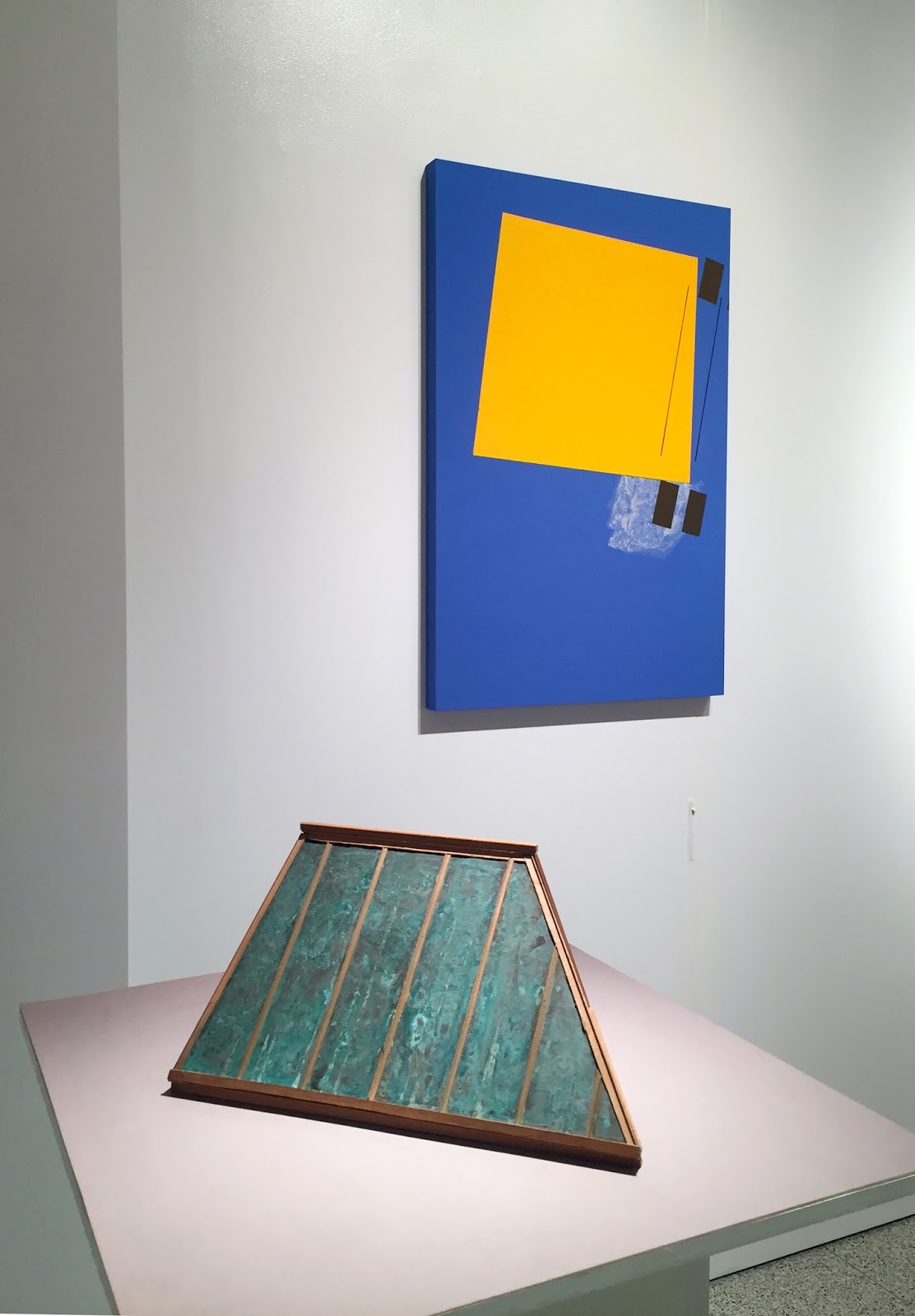
Installation view: Summer Wheat, Excerpt from a Prison Letter, 2008, sculpted and sewn wax and oil on canvas, 36 x 36 inches; Betsy Cain, shop, 2009, reflective tape on stop sign, 24 x 24 inches; four of my paintrings from the Silk Road and Vicolo series; Mary O' Horo, Dust and Wave, 2009, ink and acrylic on panel, 6 x 24 inches
.

June 26 - August 1, 2009
Opening Reception Friday June 26, 7 - 10 pm
This evening is also in conjunction with the Castleberry Hill Artstroll


Summer Guest House is an eclectic gathering of artists mixing it up at a summer happening. Marcia Wood Gallery artists have invited regional artists as their guests to exhibit work in this delightful visual conflation.

Guest Artists are Betsy Cain, Lisa Clague, Lorie Corbus, Mary Farmer, Julio Garcia, Scott Griffin, Rocky Horton, Lance Ledbetter, Mia Merlin, Mary O'Horo, Shana Robbins, Rocio Rodriguez, Ben Steele, Summer Wheat and Cosmo Whyte.

Host Artists are Frances Barth, Amber Boardman, Philip Carpenter, Monica Cook, Mary Engel, Jason Fulford, Marcus Kenney, Alan Loehle, Joanne Mattera, Chris Scarborough and Pamela Sunstrum.
.
The opening on Friday, June 26, during the Castleberry Art Stroll. Click here for a link to my exhibition page, which shows images of my work and that of my guests, or go right to the gallery site, where you can see a sampling of everyone's.
.

Tuesday, June 23, 2009

Three Blog Questions (Help!)

1) Is there a way to save my blog to my hard drive, or to get it onto a flash drive, in the format it's in? .
.
2) What do I do when I've reached my blog limit? (I'm at about 68% now)
.
3) If I decide to go go a different site, how to I take all my blog posts with me?